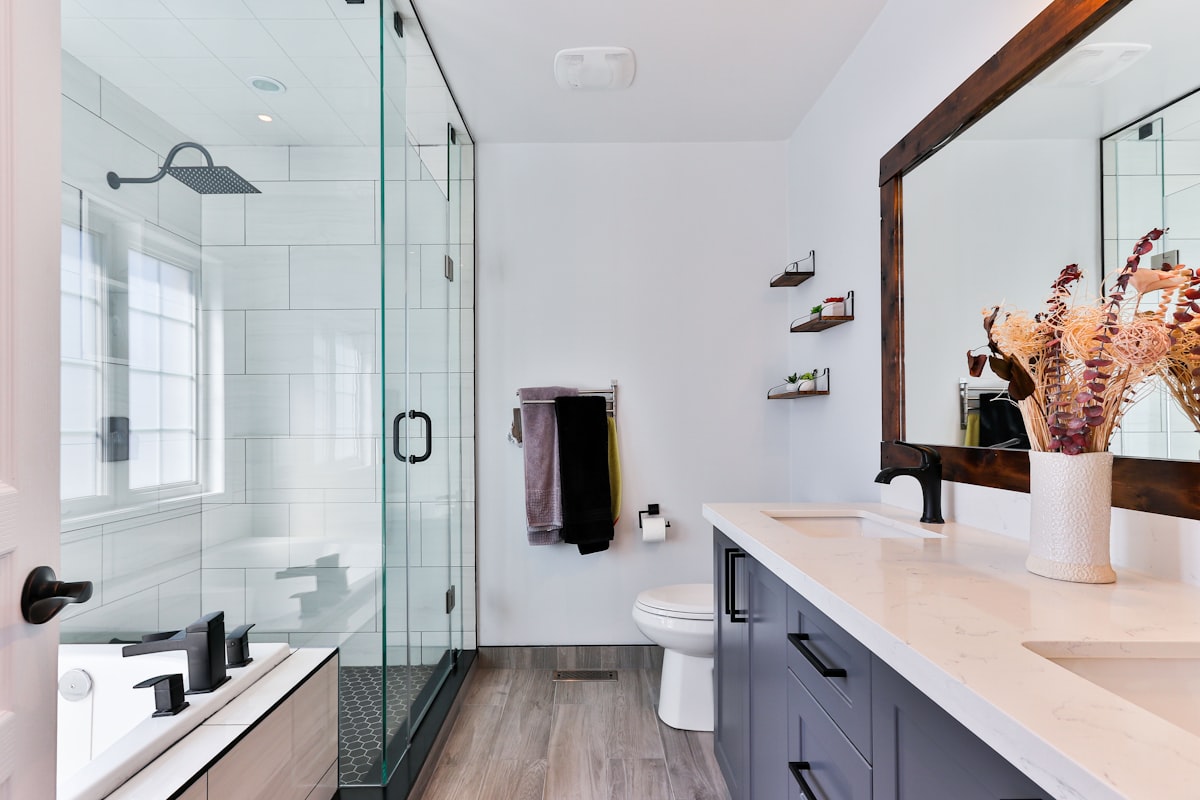
The bathroom vanity serves as both functional centerpiece and style anchor, influencing how your entire bathroom feels and functions. This single piece impacts daily routines, storage efficiency, and overall aesthetic success. Understanding how to balance size, style, materials, and features ensures your vanity choice enhances both practical needs and design goals while providing lasting satisfaction and value.
The right vanity selection can increase bathroom functionality by 40% while serving as the design element that ties together your entire bathroom aesthetic.
Size Strategy: Getting the Proportions Right

Proper vanity sizing creates balance and maximizes both function and visual appeal
Vanity sizing affects everything from daily usability to spatial harmony. Too large overwhelms the room, while too small looks lost and provides inadequate storage. The sweet spot balances visual weight with practical needs.
Vanity Sizing Guidelines
- Small Bathrooms (Under 40 sq ft): 24-36 inch vanities maintain proportion
- Medium Bathrooms (40-80 sq ft): 36-48 inch vanities provide good balance
- Large Bathrooms (80+ sq ft): 48+ inch vanities or double vanities work well
- Powder Rooms: 18-24 inch vanities offer functionality without crowding
- Master Suites: 60+ inch double vanities create luxury and convenience
Critical Measurement Considerations
- Clearance Space: Maintain 30-36 inches in front of vanity for comfortable use
- Door Swing: Ensure cabinet doors can open fully without hitting walls or fixtures
- Plumbing Alignment: Verify sink placement works with existing or planned plumbing
- Electrical Outlets: Plan for adequate power access for daily grooming needs
Style Selection: Finding Your Design Voice
Traditional Elegance
Raised panel doors, classic hardware, rich wood tones, and timeless proportions create sophisticated, enduring appeal.
- Furniture-like details
- Warm wood finishes
- Ornate hardware
- Classic proportions
Modern Minimalist
Clean lines, flat surfaces, integrated handles, and streamlined profiles emphasize function and simplicity.
- Sleek, geometric forms
- Minimal ornamentation
- Contemporary materials
- Integrated storage
Transitional Blend
Combines traditional warmth with contemporary simplicity, offering versatility and broad appeal.
- Simplified traditional details
- Mixed material combinations
- Updated proportions
- Flexible styling options
Essential Features and Functionality
Modern vanities offer numerous features that enhance daily use and long-term satisfaction. Understanding these options helps prioritize investments that match your lifestyle and preferences.
Storage Solutions
- Soft-Close Drawers: Quiet operation with full-extension access
- Adjustable Shelving: Customize interior space for specific needs
- Pull-Out Organizers: Maximize deep cabinet accessibility
- Integrated Dividers: Keep toiletries organized and accessible
Quality Details
- Dovetail Joints: Superior construction for long-term durability
- Plywood Construction: Better than particleboard for moisture resistance
- Quality Hardware: Smooth operation with lasting performance
- Finished Backs: Professional appearance and moisture protection
Countertop and Sink Integration
Vanity selection interacts closely with countertop and sink choices. Understanding these relationships ensures cohesive functionality and aesthetics while avoiding costly incompatibilities.
Integration Planning
Choose your vanity, countertop, and sink as a coordinated system rather than individual pieces. This approach ensures proper fit, unified aesthetics, and optimal functionality.
Popular Combinations
- Traditional + Marble + Undermount: Classic elegance with seamless sophistication
- Modern + Quartz + Vessel: Contemporary style with dramatic focal points
- Transitional + Granite + Integrated: Balanced approach with practical benefits
- Rustic + Wood + Farmhouse: Casual charm with authentic character
Budget Planning and Value Optimization
Vanity Investment Ranges
Smart Value Strategies
- Quality Construction Focus: Invest in solid wood and quality hardware over decorative details
- Standard Size Selection: Stock dimensions cost less than custom sizing
- Timeless Style Choice: Classic designs maintain appeal and value longer
- Professional Installation: Proper installation ensures longevity and performance
Calculate Your Vanity Project
Estimate costs and plan your bathroom vanity selection:
Installation and Placement Considerations
Successful vanity installation requires careful planning of utilities, measurements, and timing. Understanding these factors prevents delays and ensures optimal results.
Pre-Installation Planning
- Verify all measurements multiple times before ordering
- Coordinate plumbing and electrical rough-in work
- Plan delivery timing and access routes
- Prepare workspace and protect surrounding areas
Installation Best Practices
- Level and secure vanity properly to wall studs
- Seal all connections to prevent water damage
- Test all drawers and doors for proper operation
- Complete final adjustments and hardware alignment
Common Selection Mistakes to Avoid
Understanding frequent vanity selection errors helps make better choices and avoid expensive corrections later.
Sizing and Planning Errors
- Inadequate Measurements: Always measure twice and account for trim and irregularities
- Ignoring Door Swings: Ensure cabinet doors don't interfere with walls or other fixtures
- Forgetting Utilities: Verify plumbing and electrical compatibility before ordering
- Overlooking Storage Needs: Consider actual daily storage requirements, not just aesthetics
The best vanity choice disappears into daily use while enhancing every interaction. It should feel natural, look intentional, and perform flawlessly for years to come.
Maintenance and Longevity
Vanity longevity depends on material quality, construction methods, and maintenance practices. Understanding care requirements helps preserve appearance and function.
Vanity Care Essentials
Future-Proofing Your Investment
Smart vanity selection considers both current needs and future adaptability. Planning for changing requirements and design evolution ensures long-term satisfaction.
Adaptability Strategies
- Choose neutral base styles that work with changing decor
- Select quality construction that ages gracefully
- Plan for easy hardware updates and minor modifications
- Consider universal design principles for aging in place
- Invest in timeless proportions over trendy details